

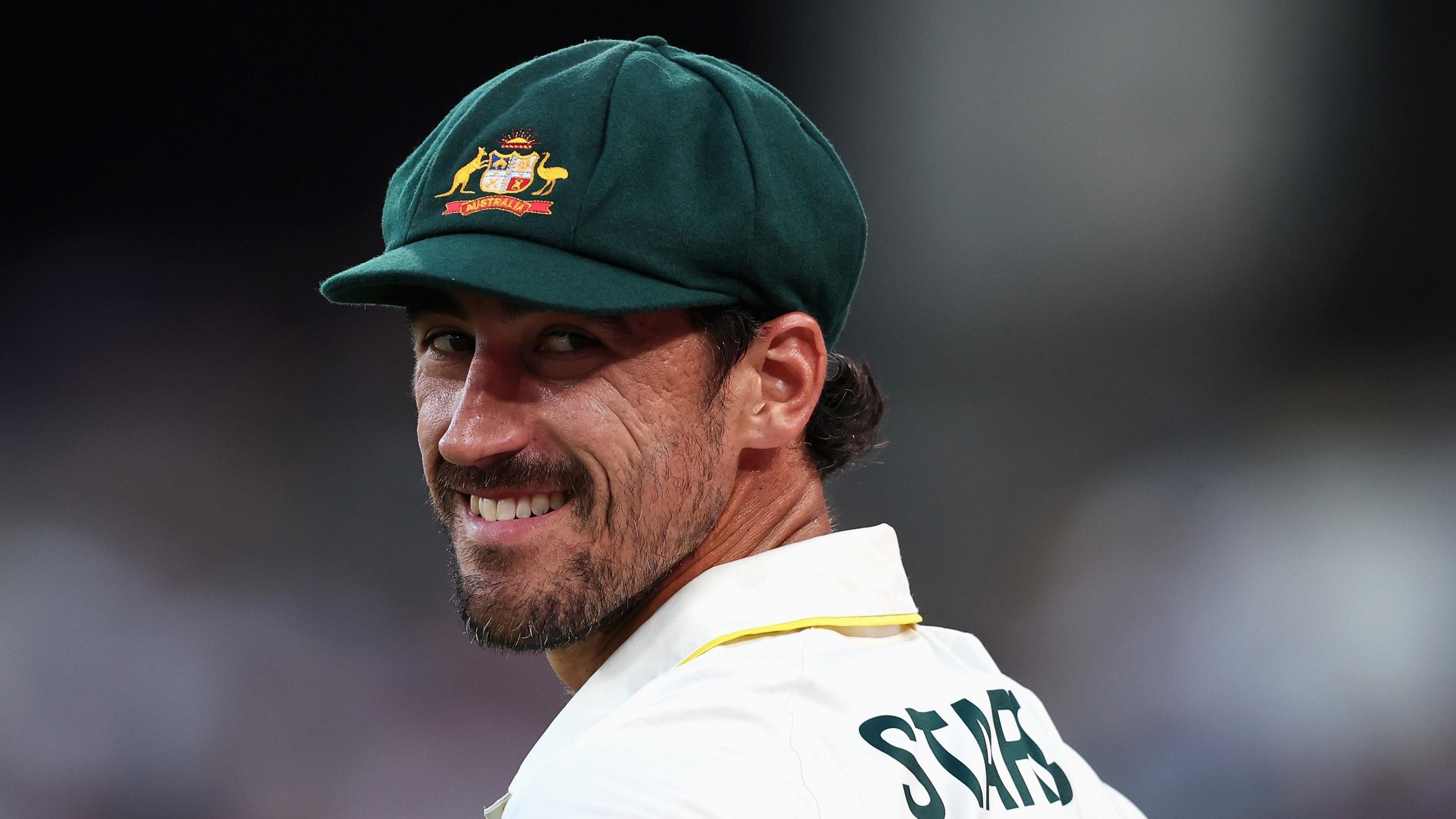
Starc is the highest wicket-taker in the current Ashes series with a haul of 26 wickets at an impressive average of 17.42.
England's Mitchell problem goes back a generation.
It began with the sheer pace of Mitchell Johnson in 2013-14, and has carried on through the skillful left-arm bowling of Mitchell Starc.
In the 2025-26 Ashes series, Starc has claimed 26 wickets - rising to the occasion in the unavailability of pace colleagues often more vaunted.
Another four wickets in the final Test in Sydney and his total will be the highest by anyone in an Ashes series since Johnson over a decade ago.
The Path to Resilience Led To Multiple Seasons of Starc
The Summer of Starc - the 35-year-old has also scored more runs than three of England's top order with the bat - is the high point of a Test career established through durability, wicket-taking skill and a eagerness to evolve.
Over the past six weeks he has overtaken Curtly Ambrose, Harbhajan Singh, Shaun Pollock and, most significantly, Wasim Akram on the all-time Test wicket-takers' list.
By nudging down Wasim, Starc became the most successful left-arm fast bowler in Test history.
And when he takes the field at his home venue for the Sydney Test this week, it will be the 27th consecutive Australia Test in a row in which he has played - a broader streak of only four missed Tests from the past 56.
The days of a young Starc being told to "toughen up" by then Australia coach Tim Nielsen are a distant memory.
"Initially it might have stung him a little bit and that is likely the role to push athletes and to try and get them to be better than they have been in the past," the former coach stated.
"This was probably one of the conversations you have with a lot of rookie quicks, especially when they start to enter international cricket.
"There were a couple of times where he said he was a bit uncomfortable and might need a spell.
"It wasn't anything more than 'I reckon it's time we have got to discover how much your body can take before it breaks rather than stopping in case it breaks.'"
What Makes Starc So Difficult to Face?
Such is the transformation, the national team's coach Andrew McDonald has discussed the idea of Starc, the oldest of the world-class pace trio, playing in England for the next Ashes series in England, by which time he will be thirty-seven.
Ray Lindwall, who played his last match in 1960, was the last Australian quick to wear a Test cap beyond his 37th birthday.
Doing so would give Starc the chance to emulate cricket's 500-wicket club and become only the fifth fast bowler to take 500 Test wickets.
Longevity can get you so far. To join that club, you must be threatening too.
"Interestingly, even though he is exceptional, is that at the top of his mark you can discern what he is planning to bowl," says former England batter Dawid Malan.
"You still have to be able to play it but you can observe when he is preparing a seam delivery, detect when he is trying to swing it."
On occasion in Starc's career when he has been criticised for being expensive, something with which he has said he has come to terms.
That drawback is massively outweighed by his remarkable skill to take wickets.
Of the elite bowlers to have taken more than 350 wickets in Tests, only two modern greats have done so with a more frequent wicket-taking rate than that of Starc.
He may leak runs, but the mean number of balls he needs to take a wicket is exceptionally low.
"The difficult aspect is I always felt like I was in against him," Malan explained.
"I felt I was seeing the ball well because he has such a nice action, you can track the delivery and there are good pitches in Australia but every so often he'd bowl an unplayable delivery and you would just be dismissed.
"Between those deliveries, I wouldn't say you ease up but you think 'I'm on top here.'
"He might deliver a half volley because he has tried something different, bowl a cut ball and then suddenly bowls a ball that starts on middle and takes my off pole.
"He has just always got that match-winning delivery. If you don't treat every ball seriously each and every delivery he just finds a way of taking your wicket."
A Revival Built On New Tricks
Although he no longer bowls at the 99mph heights of his early career these days, Starc's average pace has remained consistently around 87 miles per hour throughout the most recent phase of his career.
An talent he held from the beginning shows no indication of declining.
"He was tall, proper tall, and had really good air speed which stood out," Nielsen recalled.
"He could also move the ball back into the right-hander."
Moving the ball in the air and targeting the toes, pads or grille was, like other great left-armers before him, Starc's key strategy during the first two-thirds of his career.
But, after being dropped during the 2019 Ashes tour, Starc added the wobble seam ball to his armoury by the time he returned to England in 2023.
No-one in the world has taken as many as Starc's 118 Test wickets since the beginning of that 2023 tour. Even Indian pace ace Jasprit Bumrah trails by twelve wickets.
The wobble seam delivery has been a primary cause.
"Starc just shows you can teach an old dog new tricks," stated former Australia pace bowler Jason Gillespie.
"He studied a lot of Stuart Broad and James Anderson and spoke to them about it.
"For an athlete aged his mid-thirties to evolve his game is exceptional."
The wobble seam ball has introduced greater doubt to Starc's game.
When hurling down the ball with a wobble seam rather than looking to hoop it, some deliveries deviate sharply off the surface after pitching. Others will hold its line and bring in the edge of the bat.
Zak Crawley and Joe Root both fell to Starc wobble balls in the opening hour of this series.
Starc's number of dismissals caught in the slips has increased by almost ten percent in the past few years.
"The key to the wobble seam is to have your wrist position right behind the ball and let go of the ball off your middle finger," Gillespie explains.
"With the wobble seam Mitchell Starc will hold the ball with the seam positioned towards the off side.
"Upon release at the right time it will wobble its way down the pitch and that generates uncertainty for the batter.
"He has been working hard at perfecting this because he feels that the wobble ball going away involves the slip fielders into play and makes his in-swinging delivery to the right-handed batsman more of a surprise."
The English team's struggle by bowlers named Mitchell may continue longer than you think.


